

Computers Teach Each Other Pac-Man; Mimic Student-Teacher Relationship

@chaitanya-kukde-yk3G31
•
Oct 25, 2024
Oct 25, 2024
1.2K
Researchers at the Washington State University have demonstrated a new method that can help a computer give advice and teach new skills to other computer - just like a student-teacher method of learning. This was demoed in a paper produced by Prof. Matthew E. Taylor, WSU Allred Distinguished Professor in Artificial Intelligence, WSU in a paper published online in the Connection Science Journal. The computers in face were virtual robots. The student robots were struggling with Pac-Man and a version of the StarCraft video game when the teacher robots guided them, advised them and eventually, the student robots were able to outperform the teacher bots.
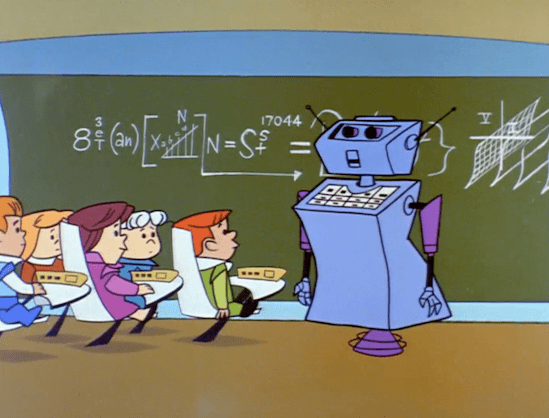
Making robots that are capable of teaching each other is a huge and important research area in the field of Artificial Intelligence. However, like most things in science, this is not easy and even the most advanced robots are "dumb" and tend to get confused easily. The trick in this virtual teacher-student experiment was to determine when and how much advice was to be given by the teachers to the students in order to achieve the best possible outcome from the pupil, much like the case in real life.
Source: #-Link-Snipped-#
The advantages of one robot efficiently teaching the other are enormous. For example, on an assembly line, it will be possible for the older robot to teach the newer one so that when the newer one has reached to a required knowledge level, it will replace the older one, without the need of being explicitly programmed by a human. One of the simplest ways of doing it would be to insert the older one's memory into the newer one. This would work fine, except in cases where hardware/software compatibility issues arise, which is quite often.
Prof. Taylor aims to develop a curriculum for these virtual bots to work their way up from simple tasks to more complex ones. He recently also received a National Science Foundation (NSF) grant to use ideas from dog trainers for the training of robotic agents. Ultimately, Prof. Taylor said he wants to to develop a better way for people to teach robotic agents and <a href="https://www.crazyengineers.com/threads/mit-training-robots-to-work-in-teams-with-humans-to-increase-productivity.74222">MIT Training Robots To Work In Teams With Humans To Increase Productivity</a>.
Source: #-Link-Snipped-#
Making robots that are capable of teaching each other is a huge and important research area in the field of Artificial Intelligence. However, like most things in science, this is not easy and even the most advanced robots are "dumb" and tend to get confused easily. The trick in this virtual teacher-student experiment was to determine when and how much advice was to be given by the teachers to the students in order to achieve the best possible outcome from the pupil, much like the case in real life.
Source: #-Link-Snipped-#
The advantages of one robot efficiently teaching the other are enormous. For example, on an assembly line, it will be possible for the older robot to teach the newer one so that when the newer one has reached to a required knowledge level, it will replace the older one, without the need of being explicitly programmed by a human. One of the simplest ways of doing it would be to insert the older one's memory into the newer one. This would work fine, except in cases where hardware/software compatibility issues arise, which is quite often.
Prof. Taylor aims to develop a curriculum for these virtual bots to work their way up from simple tasks to more complex ones. He recently also received a National Science Foundation (NSF) grant to use ideas from dog trainers for the training of robotic agents. Ultimately, Prof. Taylor said he wants to to develop a better way for people to teach robotic agents and <a href="https://www.crazyengineers.com/threads/mit-training-robots-to-work-in-teams-with-humans-to-increase-productivity.74222">MIT Training Robots To Work In Teams With Humans To Increase Productivity</a>.
Source: #-Link-Snipped-#