
Robot Raptor Inspired From Velociraptor Runs At 28.5 Miles Per Hour - KAIST Engineers

A team of engineering researchers from the Korea Advanced Institute of Science and Technology's (KAIST) MSC Lab has taken the wraps off of a new kind of robot that can run as fast as 28.5 miles per hour. Whoa. Named as the 'Raptor', the robot has been able to outrun the fastest human being by 1.1 ph. If you remember the 70 pound <a href="https://www.crazyengineers.com/threads/cheetah-robot-is-just-as-efficient-as-cheetah.67124">Cheetah Robot Is Just As Efficient As Cheetah!</a>, that was deemed as the fastest almost two years back when it ran with all its might at 29.3 miles per hour. Another quite recent example of a running bot is the <a href="https://www.crazyengineers.com/threads/outrunner-is-the-worlds-first-legged-remote-controlled-running-robot.74818">OutRunner Is The World's First Legged Remote Controlled Running Robot</a>, that could run at 20 mph and came in two versions - core and performance. The new robotic Raptor is however, quite different from these bots as it is smaller in size and super lightweight.
Instead of using artificial feet, it has been designed using 2 flexible carbon-fiber blades and is powered by one motor apiece. The robot efficiently conserves energy while running by using a tendon attached to these blades. On each side, there's a pole attached that acts like a tail and helps the robot in keeping its balance by swinging whenever the robot starts running and makes it prevent a fall. This design is inspired from the prehistoric dinosaur known as Velociraptor.
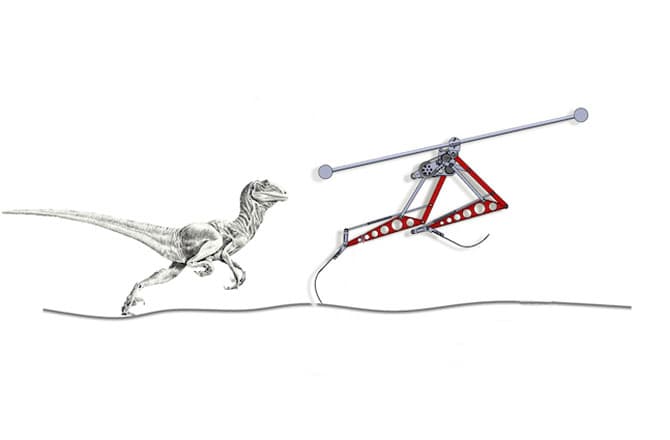
To strike down its competitor - the Cheetah Robot in a running race, the robot raptor will be worked upon by the KAIST team over the next few months. It has to be noted however that both the Raptor and Cheetah can't run on race course just yet. They are only capable of running on specially designed tracks at the moment.
In the following video, you can see the demonstration of robot raptor's running, how it tackles obstacles that come in its way, its tail-assisted pitch control and dynamic stability control. Take a look -
What are your thoughts on the new robotic raptor? Share with us in comments below.
Instead of using artificial feet, it has been designed using 2 flexible carbon-fiber blades and is powered by one motor apiece. The robot efficiently conserves energy while running by using a tendon attached to these blades. On each side, there's a pole attached that acts like a tail and helps the robot in keeping its balance by swinging whenever the robot starts running and makes it prevent a fall. This design is inspired from the prehistoric dinosaur known as Velociraptor.
To strike down its competitor - the Cheetah Robot in a running race, the robot raptor will be worked upon by the KAIST team over the next few months. It has to be noted however that both the Raptor and Cheetah can't run on race course just yet. They are only capable of running on specially designed tracks at the moment.
In the following video, you can see the demonstration of robot raptor's running, how it tackles obstacles that come in its way, its tail-assisted pitch control and dynamic stability control. Take a look -
0
