

Electronics And Biology Converge To Make 3D Printed Bionic Ear

@smriti-jha-RIDWQb
•
Oct 25, 2024
Oct 25, 2024
1.1K
Scientists at Princeton University have successfully utilized printing tools to create a superhuman ear. While the artificial ear looks pretty much like a biological ear, it attributes its superhuman strength to the ability of listening to radio frequencies far beyond the range of normal human capability. McAlpine and his team were keen on devising an efficient and versatile way to merge electronics with tissue. The research group has been working with integrated electronics for a while now. McAlpine's previous research effort includes a graphene tattoo made up of a biological sensor and an antenna which could detect bacteria on tooth enamel. In past endeavors, mechanical and thermal challenges have been a hindrance to a functional interfacing of the two materials. However the bionic ear suggests a new approach by the researcher, one that allows biology and electronics to co-ordinate in a 3D interwoven build.
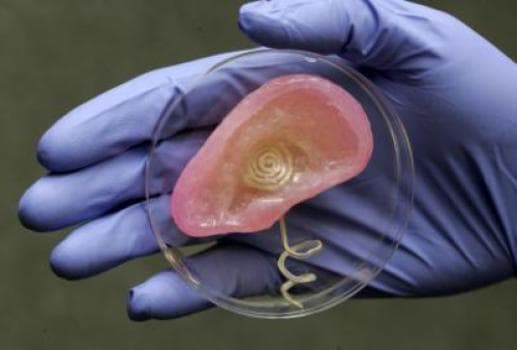
The cells and nanoparticles were 3D-printed followed by cell culture to affix a small coil antenna in a scaffolding of cartilage. Two wires extend from the base of the bionic ear to wind around a helical "cochlea" which connects to electrodes. The bionic ear has the potential of restoring or enhancing human hearing in near future by connecting it to the patient's nerve endings. All that sounds amazing but how about making it <a href="https://en.wikipedia.org/wiki/Spock" target="_blank" rel="nofollow noopener noreferrer">Spock</a>, eh?
Source: #-Link-Snipped-#
The cells and nanoparticles were 3D-printed followed by cell culture to affix a small coil antenna in a scaffolding of cartilage. Two wires extend from the base of the bionic ear to wind around a helical "cochlea" which connects to electrodes. The bionic ear has the potential of restoring or enhancing human hearing in near future by connecting it to the patient's nerve endings. All that sounds amazing but how about making it <a href="https://en.wikipedia.org/wiki/Spock" target="_blank" rel="nofollow noopener noreferrer">Spock</a>, eh?
Source: #-Link-Snipped-#