

China Planning To Build Solar Power Station In Space
Chinese engineers seem to be getting their new mega-project ideas from Isaac Asimov's books. According to <a href="https://economictimes.indiatimes.com/news/international/business/china-plans-to-build-huge-space-solar-power-station/articleshow/46742968.cms" target="_blank" rel="noopener noreferrer">China plans to build huge space solar power station - The Economic Times</a>, China is planning to build a mega solar power station at an altitude of 36,000 kilometers above the ground to cut the smog and greenhouse gases while solving the energy problem. If China manages to build the power station of the scale it's planning; it will be bigger engineering project than the entire Apollo Program and even the International Space Station.
The original idea of the project was floated by Asimov in his 1941 fiction titled 'Reason' in which the space station collects and transmits the solar energy back to the Earth using microwave beams. Wang Xiji an academician from the Chinese Academy of Sciences has said that Asimov's fictional work always had a scientific base. Wang has dedicated nearly five decades of his life to space technology research and says that the project would be really huge with each solar panel reaching about 5-6 sq.km; about 12x the the size of Tian'anmen Square in Beijing. People would be able to see the power station in the Sky with naked eyes at the night like a star.
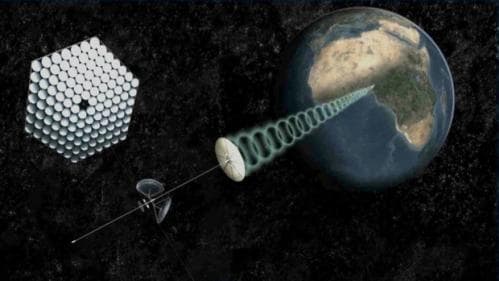
The <a href="https://www.crazyengineers.com/threads/space-based-solar-power-plants-to-become-reality.64739">Space Based Solar Power Plants To Become Reality</a> would cut on the fluctuations in collection of solar energy on the Earth because of day and night. The space power station would be able to collect solar energy with 99% of the time and also generate 10x more electricity per unit area as compared to ground-based panels. Wang firmly believes that the solar based power station would be able to solve the energy crisis on the Earth.
The main challenge in realisation of the project would be deployment of the solar panels in space. Setting up a 10,000 tons of infrastructure in space would required several hundred trips from rockets. While Wang is quite optimistic about space power technology, we'd love to collect ideas from our fellow crazy engineers whether they see future in it. We look forward to your views and opinions.