Basics of Civil Engineering.

rajcivil2k6

rajcivil2k6

@rajcivil2k6-ScQrQV Oct 27, 2024
Hi

I thought it would be great if we can share the basic concepts, so that aspiring Engineers would understand better about the things they Study. I searched for such thread couldn't find any, and i found many are interested with their own doubts related to some assignment oriented topics. So i thought such thing may help them to understand better. If am wrong do correct.

Come on Civil Engineers, start Knowledge Transfer, don't be selfish.

Note: Do share basic concepts, methods, thumb rules etc. in brief, so that the person
making use wouldn't feel bored.

NOTE: Am just gonna share bits and pieces of information i have, and i cant put any specific values because it depends on the code you follow (Global forum,So i cant be specific), am gonna be more general than specific. My idea to share the basic's behind, which is unnoticed at times by many. Sorry

Replies

Welcome, guest

Join CrazyEngineers to reply, ask questions, and participate in conversations.

CrazyEngineers powered by Jatra Community Platform

  • rajcivil2k6

    rajcivil2k6

    @rajcivil2k6-ScQrQV Feb 18, 2011

    STIRRUP:

    Every Civil engineer would know what is stirrup, use of stirrup is to handle the shear force and to hold the re-bars in position. But how it counteracts ????

    [​IMG][​IMG]

    In the above picture u can see a beam and truss, the vertical member in truss is similar to stirrup in beam and compression member in truss is similar to concrete between the stirrups. you are aware that concrete is good at compression and steel is good at tension, thus the combination of both counters the shear force.
  • rajcivil2k6

    rajcivil2k6

    @rajcivil2k6-ScQrQV Feb 19, 2011

    Why Steel is used in construction, why not other metals ? 😕

    Basic reason is "THERMAL COMPATIBILITY", then comes the reasons like cost, availability, strength etc. etc.


    At times they ask such question in Interview's and people state all reasons other than the above highlighted.
  • martincrow

    martincrow

    @martincrow-0TCTDa Feb 20, 2011

    How i can find a perfect layout for my house? I am just started construction of my house, and i want to build it in such a way that there is to separate apartment should be there, because we are two brothers, and i have a area of about 1250 Square feet.Any suggestions will be appreciated.
    Thanks in advance to everyone.
  • rajcivil2k6

    rajcivil2k6

    @rajcivil2k6-ScQrQV Feb 20, 2011

    martincrow
    How i can find a perfect layout for my house? I am just started construction of my house, and i want to build it in such a way that there is to separate apartment should be there, because we are two brothers, and i have a area of about 1250 Square feet.Any suggestions will be appreciated.
    Thanks in advance to everyone.
    Ooops ! 😔

    Am afraid that i have not mentioned clearly the purpose 😒

    Still, your question can be answered if you could give your requirements, shape and size of plot etc.
  • rajcivil2k6

    rajcivil2k6

    @rajcivil2k6-ScQrQV Feb 20, 2011

    Cover thickness/Clear Cover, is the distance between concrete surface and the reinforcement nearest to this surface. It is provided by using spacers made of concrete or PVC.

    Sand blast prior to concrete
    , it is very important to note that the steel waiting for concrete placement should be free from rust, if in case it is rusted sand blasting technique can be used.


    Negligence of such small things would reduce life of the structure.
  • rajcivil2k6

    rajcivil2k6

    @rajcivil2k6-ScQrQV Feb 21, 2011

    Height of drop of concrete, is also an important aspect to be considered because if the drop height is more than 1 meter segregation would happen and result in reduction of concrete strength.

    Temperature during concrete pour, has to be taken into consideration when volume is more, the temperature limits can be referred from local Code of practice.
    Precautions that can be taken are, spraying water over shutter & steel, cooling of aggregates prior to batch, adding ice to mix etc.


    PS: If am wrong at any point do correct me CEans.
  • rajcivil2k6

    rajcivil2k6

    @rajcivil2k6-ScQrQV Feb 21, 2011

    Aggregates, used for concrete production should be less pores, in other words it should not absorb water more than recommendations by Code's, usage of such aggregates would reduce strength by absorbing water from concrete.
  • maria flor

    maria flor

    @maria-flor-8cAkif Feb 21, 2011

    Types of floor systems
    We can classify floor systems in different ways:
    1.by material
    floor slab – concrete
    beams – concrete or steel
    2.by structural action of the slab
    one way spanning slab
    two way spanning slab
    flat slab
    3.by method of construction
    steel beams with cast-in-situ slab
    steel beams with precast slab
    cast-in-situ concrete beams with cast-in-situ slab
    precast beams with precast slab
  • rajcivil2k6

    rajcivil2k6

    @rajcivil2k6-ScQrQV Feb 21, 2011

    Mortar, i have seen people getting doubt while calculating cement, fine aggregate & course aggregate for mortar mixes

    For example am going to consider 1:4 mortar, 1 cum of cement mortar work is to be done


    1:4 means 1 part of Cement by volume 4 parts of fine aggregate by volume

    Total volume = 1 cum

    Quantity of Cement = (1/(1+4)) x 1 = 0.20 cum
    1 cum of Cement = 1441 Kg
    Cement quantity required = 1441 x 0.20 = 288.2 Kg

    Quantity of Sand = (1/(1+4)) x 4 = 0.80 cum

    We have not done it correct, the above quantity would yield hardly 0.63 cum of mortar because we have not considered voids & cavities. So, we have to increase quantity by 50 – 60%.

    So, the final quantity for producing 1 cum 1:4 mortar is

    Cement = 288.2 + 60 % ( for voids & cavities) = 288.2 x 1.6 = 461.12 Kg

    Sand = 0.80 + 60 % ( for voids & cavities) = 0.80 x 1.6 = 1.28 cum
  • maria flor

    maria flor

    @maria-flor-8cAkif Feb 21, 2011

    LOADING
    It is a very important step in the total design process to determine the design loads for the structure. Typical loads for a building are dead load, live load, wind load and earthquake load. Special consideration is sometimes given to impact and fatigue that may occur in vehicles, cranes or machinery.

    Dead load consists of the weight of the structure itself plus the weight of permanently installed equipment. It includes the weight of the structural members, floors, ceilings,duct works, exterior walls, permanent partitions and unusual items such as water in swimming pools.

    Live load includes the loads specified by the loading standards for various uses and occupancies of the building. These specified loads cover the occupants, furniture, movable equipment, fixtures, books etc, and are the minimum gravity live loads for which the building can be designed within the jurisdiction of that standard.

    Wind load can be treated as a static load and is computed with the aid of reference velocity pressures, gust factors, exposure factors and shape factors. Tall, slender buildings must be designed using a dynamic approach to the action of wind gusts or with the aid of experimental methods such as wind tunnel tests.

    Conventional earthquake (seismic) design procedures replace the dynamic earthquake loads with equivalent static loads. The earthquake loads which are stipulated are recognized to be much less than the maximum loads possible from a very severe earthquake.
  • rajcivil2k6

    rajcivil2k6

    @rajcivil2k6-ScQrQV Feb 22, 2011

    Curing , is very important point in concrete works, if proper curing is not done the result would be crack formation & reduction in strength.

    Why there is a need for curing ?

    When concrete is setting (gaining strength) lot of heat is generated, in order to compensate the water loss due to the heating action water is added externally. In recent times there are other methods of curing using membranes and chemicals. Curing time depends on the type of structure, weather condition, type of concrete etc..
  • maria flor

    maria flor

    @maria-flor-8cAkif Feb 22, 2011

    Is the maximum number of days for curing is 7??
  • rajcivil2k6

    rajcivil2k6

    @rajcivil2k6-ScQrQV Feb 22, 2011

    It is not limited to 7 days.
  • maria flor

    maria flor

    @maria-flor-8cAkif Feb 22, 2011

    rajcivil2k6
    It is not limited to 7 days.
    Ok. Thank you so much!!!
  • CIVILPRINCESS

    CIVILPRINCESS

    @civilprincess-308hDv Feb 22, 2011

    nice work guys 😀
    will post a list tomorrow. 😀
  • rajcivil2k6

    rajcivil2k6

    @rajcivil2k6-ScQrQV Feb 23, 2011

    Shuttering or form work, is the term used for temporary timber, plywood, metal or other material used to provide support to wet concrete mix till it gets strength for self-support. It provides supports to horizontal, vertical and inclined surfaces or also provides support to cast concrete according to required shape and size. The form work also produces desired finish concrete surface.

    Shuttering or form work should be strong enough to support the weight of wet concrete mix and the pressure for placing and compacting concrete inside or on the top of form work/shuttering. It should be rigid to prevent any deflection in surface after laying concrete and be also sufficient tight to prevent loss of water and concrete. Shuttering should be easy in handling, erection at site and easy to remove when cement concrete is sufficient hard.
  • antani

    antani

    @antani-knD9eR Jul 16, 2011

    hai guys,'m graduated my civil engg two months back.....can u guys post some basic concepts in interview point of view[i lack knowledge about basic concepts] thanks in advance😀
  • urvashi Yadav

    urvashi Yadav

    @urvashi-7YIKBE Jul 21, 2011

    Plz tell me why abutments are made wider than piers in bridges.
  • jaxrobinson

    jaxrobinson

    @jaxrobinson-27LwVb Jul 22, 2011

    Oh thanks for explaining it very well.I like it!!
  • CivilGuy

    CivilGuy

    @civilguy-4XmEDV Feb 16, 2012

    Many Many Thanks ...
  • jones raj

    jones raj

    @jones-raj-rYeFn1 Jun 12, 2012

    #-Link-Snipped-#
  • jones raj

    jones raj

    @jones-raj-rYeFn1 Jun 12, 2012

    rajcivil2k6
    Height of drop of concrete, is also an important aspect to be considered because if the drop height is more than 1 meter segregation would happen and result in reduction of concrete strength.

    Temperature during concrete pour, has to be taken into consideration when volume is more, the temperature limits can be referred from local Code of practice.
    Precautions that can be taken are, spraying water over shutter & steel, cooling of aggregates prior to batch, adding ice to mix etc.


    PS: If am wrong at any point do correct me CEans.
    #-Link-Snipped-#
  • Ankita Katdare

    Ankita Katdare

    @abrakadabra Mar 26, 2014

    #-Link-Snipped-# #-Link-Snipped-# This was really a great initiative. Is it possible to carry it forward? Anyone here from civil engineering to take up this activity?
    It is helping a lot of students and professionals.
  • Sohabran Singh Pundir

    Sohabran Singh Pundir

    @sohabran-singh-pundir-9er9C6 Mar 31, 2014

    rajcivil2k6
    Why Steel is used in construction, why not other metals ? 😕

    Basic reason is "THERMAL COMPATIBILITY", then comes the reasons like cost, availability, strength etc. etc.


    At times they ask such question in Interview's and people state all reasons other than the above highlighted.
    Can you elaborate "Thermal Compatibility" part?
  • Rifat

    Rifat

    @rifat-lMacu8 Jun 22, 2014

    Brother,How can I build a column without a "kicker"??
  • livingenzyme

    livingenzyme

    @livingenzyme-6bl52r Jun 27, 2014

    Most of what I know and use as an engineer I learned from the field. This holds true for every specialized profession, actually.

    This is why I hesitate every time someone asks me what I do. It's simply too broad and specialized to cram it in one sentence or paragraph.
  • Kamaldeep Singh``

    Kamaldeep Singh``

    @kamaldeep-singh-Q031Qf Jul 30, 2014

    need a book to study basics of civil engineering.
    moments,stress,forces,materials,etc.
    can anybody please suggest a relevant book.
  • maria flor

    maria flor

    @maria-flor-8cAkif Jul 30, 2014

    Kamaldeep Singh``
    need a book to study basics of civil engineering.
    moments,stress,forces,materials,etc.
    can anybody please suggest a relevant book.
    try Strength of Materials by Singer
  • Ankita Katdare

    Ankita Katdare

    @abrakadabra Jul 31, 2014

    #-Link-Snipped-# You are back after long. Welcome back! 😀 The civil engineering section is full of questions for you to address. Do take a look.
  • DADISETTY GOVIND

    DADISETTY GOVIND

    @dadisetty-e8Qu7A Aug 16, 2014

    antani
    hai guys,'m graduated my civil engg two months back.....can u guys post some basic concepts in interview point of view[i lack knowledge about basic concepts] thanks in advance😀
    1.the highest and longest bridges,and the concept of construction behind them
    2.some of the secrets of historical constructions,hoe they constructed at that times,without any heavy machinery
    3.they will give a present problem of any destruction and ask ur idea to reduce it
  • DADISETTY GOVIND

    DADISETTY GOVIND

    @dadisetty-e8Qu7A Aug 16, 2014

    rajcivil2k6
    Shuttering or form work, .
    hey simply it means some big sticks will be arranged at building constructions na,hey plz add small PICS which may use to unknown
  • DADISETTY GOVIND

    DADISETTY GOVIND

    @dadisetty-e8Qu7A Aug 16, 2014

    rajcivil2k6
    Shuttering or form work, .
    hey simply it means some big sticks will be arranged at building constructions na,hey plz add small which may use to unknown
  • DADISETTY GOVIND

    DADISETTY GOVIND

    @dadisetty-e8Qu7A Aug 16, 2014

    rajcivil2k6
    Shuttering or form work, .
    hey simply it means some big sticks will be arranged at building constructions na,hey plz add small which may use to unknown
  • INDUMATHI R

    INDUMATHI R

    @indumathi-r-cBXspW Aug 6, 2015

    Explain about beam....
  • INDUMATHI R

    INDUMATHI R

    @indumathi-r-cBXspW Aug 6, 2015

    Explain about advanced technology...
  • hardik senjaliya

    hardik senjaliya

    @hardik-senjaliya-CePWfJ Aug 23, 2015

    why we use broken tiles in terrace and not the whole one?
  • Ankita Katdare

    Ankita Katdare

    @abrakadabra Jan 19, 2016

    hardik senjaliya
    why we use broken tiles in terrace and not the whole one?
    This is an interesting question. I didnt know that they 'always' use broken tiles on terrace. Isn't it an optional thing?
  • Calvin Paul

    Calvin Paul

    @calvin-paul-nzyWfC Apr 20, 2016

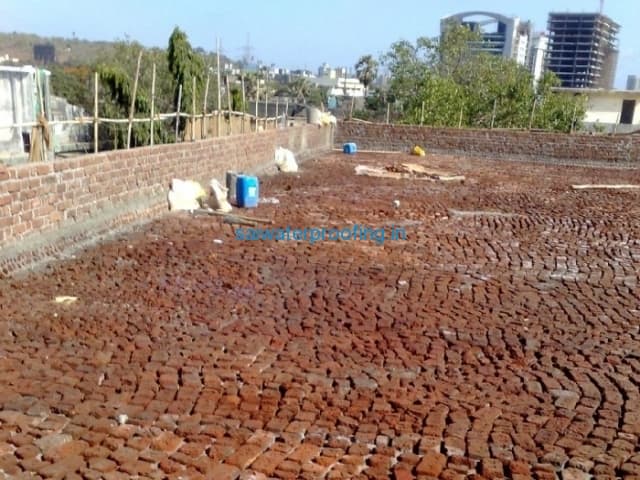
    It isn't optional. Terrace waterproofing in a nutshell - method Brick-Bat-Coba - Water proofing with Brick bat Coba by Exposing the RCC Slab to its bare Surface, Clearing the Surface of all Lose Particles and Dust, Carting away of debris and Spreading neat Cement Slurry mixed with waterproofing Compound on the Cleaned Surface, filling up the uneven Surface, honey Combing etc. Spreading of CM(1:5) mix, mixed with Water proofing Compound and Grouting brick bat in the Mortar with Necessary Slope of approx. 1 in 100 for Easy flow of Water. Filling the Joints in the bricks with the Mortar properly. This treatment to Continue along the inner Side of the Parapet or other Adjoining Walls up to a height of 30 cm in the Shape of a round Vatta and finally Converting the top Surface with Jointless Waterproofing Cement Sand Mortar 1:4, 20 to 25 mm thick finished Smooth with Trowel in Cement Colour marked into 30cms x 30 cms False Squares. The Average thickness of Complete treatment shall be 100mm. Curing to be Continuously done for Surface

    Bricks are used cause as everybody knows that bricks absorb a lot of water. So if the top most layer of plaster ever cracks and water seeps in the bricks will drink the water. But an issue like that should b sorted after the monsoon and not forgotten in gods name.

    The mosaic tiling used serves 2 purposes. Firstly for reflecting heat and second to protect the top most layer of brick bat from abrasion(people who keep pots or terraces that see a lot of live load daily.)

    So ur waterproofing has been achieved then why should u add tiles? If you've ever watched tiles being laid in the house you'll learn that underneath there is sand and not cement, in tiles being stuck to walls cement is used and only on the 4 corners but about an inch thick rich cement. If you want to add tiles on terrace then u cant fill with sand underneath nor can u only apply cement on 4 corners, means you will have to fill an inch thick of ''rich'' cement again which will drive up the cost tremendously and contribute negatively as it will raise the temperature.

    So to sum it up the mosaic tiles do not contribute to waterproofing in anyway, it is only there merely for aesthetics.
  • Calvin Paul

    Calvin Paul

    @calvin-paul-nzyWfC Apr 20, 2016

    Source: #-Link-Snipped-#t4_20130426224120
  • nagasarath

    nagasarath

    @nagasarath-9hb02s Apr 30, 2016

    Can some one suggest me any book which covers basics of civilengineering.I am having interview it will be helpful
  • Ankita Katdare

    Ankita Katdare

    @abrakadabra Apr 30, 2016

    nagasarath
    Can some one suggest me any book which covers basics of civilengineering.I am having interview it will be helpful
    Some top-rated books you can buy and read for basics of civil engineering include -

    • Basics of Civil Engineering - by S.S. Bhavikatti
    • A Handbook for Civil Engineering - by B. Singh
    • Civil Engineering: A Very Short Introduction - by David Muir Wood
    I hope these will help you.