

Samsung Just Crashed Apple’s AirDrop Party. Galaxy S26 Quick Share Wants In
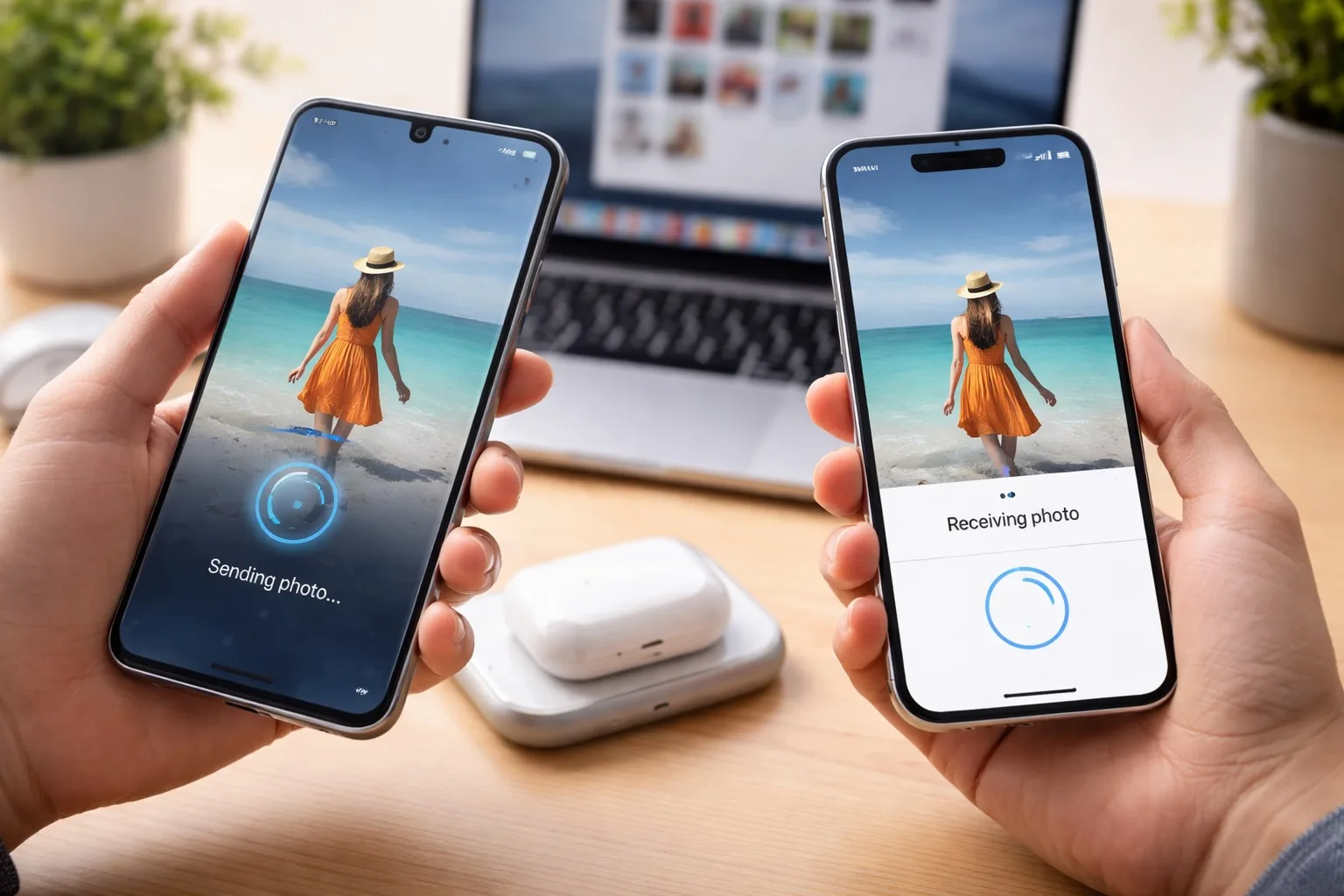

Samsung has decided that the easiest way to make file sharing less annoying is to walk straight into Apple’s backyard.
The company says the Galaxy S26 series will be the first to get new Quick Share support that works with AirDrop-style sharing to Apple devices, starting March 23 in Korea, before expanding to Europe, Hong Kong, Japan, Latin America, North America, Southeast Asia and Taiwan. Samsung has also said support for more devices will be announced later.
That may sound like a small convenience update. It isn’t. It is Samsung taking aim at one of the stickiest parts of Apple’s ecosystem.
AirDrop has been around since 2011, when Apple introduced it to make local file transfers between nearby devices feel almost suspiciously easy. Over time, it became one of those features that quietly did more ecosystem lock-in work than glossy product videos ever could. iPhone owners could send photos, documents and links to other Apple devices with barely any friction. Everyone else got to stand nearby holding an Android phone like the wrong invitation to the right party. Apple still positions AirDrop as a seamless way to share between iPhone, iPad and Mac devices, which is exactly why it has been so effective inside Apple’s ecosystem.
Samsung, of course, has not been asleep. Quick Share has been its answer to AirDrop for years, first across Galaxy hardware and later more broadly through Android and Windows-friendly sharing workflows. The problem was never that Samsung lacked a sharing feature. The problem was that the modern device world is mixed. One friend uses a Galaxy. Another lives on an iPhone. Someone in the family has a MacBook. Someone else still sends files to themselves on WhatsApp because the industry apparently enjoys chaos.
That is what makes this update more important than the branding suggests.
Samsung is not just polishing Quick Share. It is trying to remove one of the most persistent everyday annoyances in cross-platform tech. And unlike flashy AI features that get demoed once and forgotten by the weekend, frictionless file sharing is the kind of thing people notice immediately. If this works reliably, it could become one of the most practical upgrades in the Galaxy S26 experience.
There is still one important caveat. Samsung’s announcement says Quick Share will support AirDrop, but it does not spell out the full technical details of how this interoperability works. So the safest read here is not that Samsung has somehow adopted Apple’s underlying protocol wholesale. The real story is that Samsung is building a bridge to the Apple side of the device world, and that alone is enough to shift expectations.
The bigger impact is strategic.
For years, Apple’s ecosystem advantage has depended partly on “small” conveniences that add up. AirDrop is one of those conveniences. iMessage is another. The Apple Watch is another. None of them by themselves explain ecosystem loyalty, but together they create a world where leaving Apple feels like volunteering for extra hassle. Samsung’s move does not erase that advantage, but it chips away at it in a place where users feel pain every week, not once a year.
It also puts pressure on the rest of the Android market. Samsung is usually at its best when it stops trying to merely match Apple bullet point for bullet point and instead fixes a real workflow problem. Cross-platform sharing is one of those problems. If Samsung can make Quick Share feel dependable across Android, Windows and Apple-adjacent devices, it stops being just a Galaxy feature and starts looking like the most flexible sharing system in mainstream consumer tech.
That future is not guaranteed. Cross-platform features often sound better in press releases than they feel in real life. Setup friction, compatibility quirks and regional rollout delays can turn a promising update into a footnote. Samsung also happens to be starting with the Galaxy S26 line only, which means the useful version of this feature may take time to reach the broader Galaxy audience.
Still, this is one of the more interesting mobile updates of the year because it attacks a basic truth of modern gadgets: most people do not live inside one pristine ecosystem anymore. They live in a messy device household held together by chargers, cloud links and mild irritation.
Samsung seems to have noticed.
And Apple’s famously neat garden just got a gate.