
Geobacter Bacteria Breakthrough- Electricity Generated From Hydrogen

Researchers at the University of Massachusetts, Amherst, have engineered a breed of electricity producing bacteria- the Geobacter species- who grow simply by using hydrogen gas as their exclusive electron donor, while carbon dioxide suffices all its carbon requirements. Amit Kumar, a researcher in this Lovley Lab Group's study team, states that this opens up a whole new possibility of generating electricity from hydrogen alone.
The lab under Derek Lovely's leadership has been studying Geobacter bacteria from the time Lovely first isolated Geobacter metallireducens from the Potomac River back in 1987. This species excited curiosity owing to their bioremediation, bioenergy potential, interesting electron transfer capabilities, and their ability to move electrons outside the cell and haul these electrons over long distances through conductive filaments better known as microbial nano-wires.
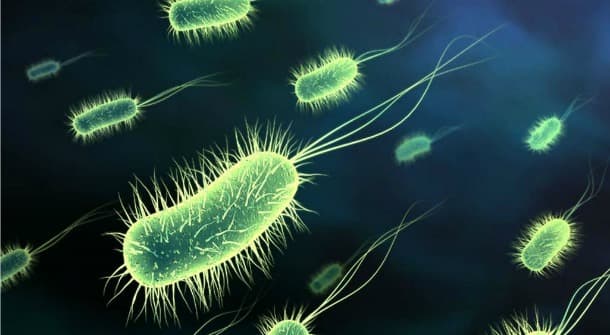
The team studied a connecting species of G. metallireducens called Geobacter sulfurreducens, which can ably produce electricity by decomposing organic carbon compounds with a graphite electrode such as iron-oxide or gold to minister as the lone electron acceptor.
A strain of bacteria were specifically engineered in a microbial fuel cell so that they did not feel the requirement of organic carbon, and the conclusion observed was that when the hydrogen supplied to the microbial cell was intermittently stopped, electrical signals drooped substantially and cells attached to the electrodes did not produce any significant electricity.
These findings and studies shall be reported at the 113th General Meeting of the American Society for Microbiology.
The lab under Derek Lovely's leadership has been studying Geobacter bacteria from the time Lovely first isolated Geobacter metallireducens from the Potomac River back in 1987. This species excited curiosity owing to their bioremediation, bioenergy potential, interesting electron transfer capabilities, and their ability to move electrons outside the cell and haul these electrons over long distances through conductive filaments better known as microbial nano-wires.
The team studied a connecting species of G. metallireducens called Geobacter sulfurreducens, which can ably produce electricity by decomposing organic carbon compounds with a graphite electrode such as iron-oxide or gold to minister as the lone electron acceptor.
A strain of bacteria were specifically engineered in a microbial fuel cell so that they did not feel the requirement of organic carbon, and the conclusion observed was that when the hydrogen supplied to the microbial cell was intermittently stopped, electrical signals drooped substantially and cells attached to the electrodes did not produce any significant electricity.
These findings and studies shall be reported at the 113th General Meeting of the American Society for Microbiology.
0