

SkyOrbiter - The Solar Powered Drone To Provide Internet Access

@thebigk
•
Oct 26, 2024
Oct 26, 2024
1.5K
SkyOrbiter is an interesting solar powered drone that aims to provide Internet access across the world. Developed by a Portuguese company that goes by the name 'Quarkson' successfully tested the drone at an undisclosed location on April 2. This flying machine is equipped with Wi-Fi transmitting equipment that offers Internet access on the ground. The signal transmitted by the drone needs to be catched via a patch antenna.
Regular readers of <a href="https://www.crazyengineers.com">CrazyEngineers</a> will quickly associate 'drone' and 'Internet' to Facebook's ambitious project that aims to do the same. Facebook acquired <a href="https://www.crazyengineers.com/threads/facebook-may-acquire-titan-aerospace-for-internet-beaming-drones.73663">Facebook May Acquire Titan Aerospace For Internet-Beaming Drones</a> - the company that made drones to deliver the Internet. Delivery of the Internet via drones is expected to be a part of Facebook's ambitious plan to offer free Internet access via the 'internet.org' initiative. Google too, aims on delivering the Internet from the sky using floating balloons via its very interesting project called '<a href="https://www.crazyengineers.com/threads/project-loon-googles-balloon-powered-global-internet.68523">Project Loon : Google's Balloon Powered Global Internet</a>'.
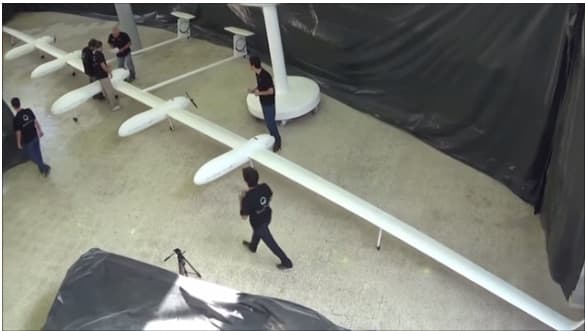
Image Credit: Quarkson
The SkyOrbiter is an innovative flying machine. The Quarkson team tested a smaller version of the actual drone that will be commissioned. The drone had a wingspan of about 16 ft and was flown to an altitude of about 330 ft. It was then tested to deliver wi-fi signal to the ground. Quarkson's founder and CEO, Mr. Miguel Angelo Martins da Silva informed that the test flight confirmed viability of the concept. The team has also built SkyOrbiter LA25, with a wing span of about 72 ft - which took about an year to build; but could not test fly it because the Portuguese government did not approve it.
The drones built by Quarkson will be able to deliver LTE or Wi-Fi signal over the unlicensed spectrum or via a carrier on the licensed spectrum. The engineering team, Silva said, was capable of producing a new drone prototype every two months and with the investments flowing in; they may begin mass production. Take a look at the video embedded below that shows the Solar Powered Internet Drone flying -
Via: #-Link-Snipped-#
Regular readers of <a href="https://www.crazyengineers.com">CrazyEngineers</a> will quickly associate 'drone' and 'Internet' to Facebook's ambitious project that aims to do the same. Facebook acquired <a href="https://www.crazyengineers.com/threads/facebook-may-acquire-titan-aerospace-for-internet-beaming-drones.73663">Facebook May Acquire Titan Aerospace For Internet-Beaming Drones</a> - the company that made drones to deliver the Internet. Delivery of the Internet via drones is expected to be a part of Facebook's ambitious plan to offer free Internet access via the 'internet.org' initiative. Google too, aims on delivering the Internet from the sky using floating balloons via its very interesting project called '<a href="https://www.crazyengineers.com/threads/project-loon-googles-balloon-powered-global-internet.68523">Project Loon : Google's Balloon Powered Global Internet</a>'.
Image Credit: Quarkson
The SkyOrbiter is an innovative flying machine. The Quarkson team tested a smaller version of the actual drone that will be commissioned. The drone had a wingspan of about 16 ft and was flown to an altitude of about 330 ft. It was then tested to deliver wi-fi signal to the ground. Quarkson's founder and CEO, Mr. Miguel Angelo Martins da Silva informed that the test flight confirmed viability of the concept. The team has also built SkyOrbiter LA25, with a wing span of about 72 ft - which took about an year to build; but could not test fly it because the Portuguese government did not approve it.
The drones built by Quarkson will be able to deliver LTE or Wi-Fi signal over the unlicensed spectrum or via a carrier on the licensed spectrum. The engineering team, Silva said, was capable of producing a new drone prototype every two months and with the investments flowing in; they may begin mass production. Take a look at the video embedded below that shows the Solar Powered Internet Drone flying -