
Ryden Dual Carbon Battery by Power Japan Plus Shows How Batteries Should Be

A Japanese startup company named Power Japan Plus has showed a promise in putting the energy storage woes to rest. The engineering team at PJP has developed an entirely new kind of an organic battery, based entirely on carbon that is a whole lot durable, safer, cheaper and quicker to charge compared to the most modern Li-Ion batteries. CTO of Power Japan Plus, Mr. Kaname Takeya says that these batteries will eventually boost the range of electric vehicles to 300 miles. We've no reason to doubt Mr. Takeya because he's the man who designed the power system for the Toyota's Prius Hybrid car lineup.
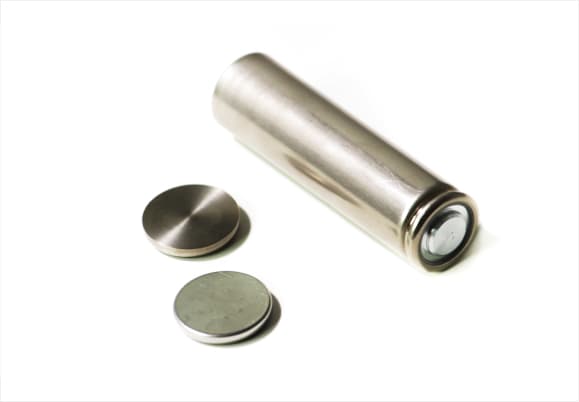
The 'Ryden' batteries are expected to be rolled out of a pilot production line by the end of this year. The video embedded below shows a prototype battery developed at the Kyushu University in Japan by PJP. The battery exhibits properties that no other regular batteries has. These batteries have very high energy density and at the same time, they can be charged 20x faster. The key to achieving this is the presence of carbon based anode and cathode; instead of Nickel, Manganese or Cobalt. Since Carbon is abundantly available in nature; the cost of production of these batteries would be very low.
The dual carbon batteries are reliable as well. The PJP team says that these can be charged through about 3000 cycles. PJP team also talks about the safety feature of the Ryden. The batteries get rid of the problem of thermal runaway because the changes in temperature of the battery, while it's in operation, is quite low. It also helps avoid the need of complex cooling systems.
Do check out the official website of PJP (linked in source) and let us know your thoughts.
Source: #-Link-Snipped-#
The 'Ryden' batteries are expected to be rolled out of a pilot production line by the end of this year. The video embedded below shows a prototype battery developed at the Kyushu University in Japan by PJP. The battery exhibits properties that no other regular batteries has. These batteries have very high energy density and at the same time, they can be charged 20x faster. The key to achieving this is the presence of carbon based anode and cathode; instead of Nickel, Manganese or Cobalt. Since Carbon is abundantly available in nature; the cost of production of these batteries would be very low.
Do check out the official website of PJP (linked in source) and let us know your thoughts.
Source: #-Link-Snipped-#
0