
Robots will never have emotions & feelings - Says Math. But Never Say Never!

@thebigk
•
Oct 25, 2024
Oct 25, 2024
1.5K
Researchers have been trying to use mathematical models to determine how our brain creates consciousness, emotions and feelings for decades now. One of the latest model that makes an attempt at this has predicted that the machines will never have any of the distinct human characteristics viz. emotions and feelings. All this mathematical model is trying to say is that humans will continue to have the supreme status on the Earth for a comfortably long time and humanoids will continue to serve hot coffee without complaining.
Giulio Tononi, researcher at the University of Wisconsin-Madison says that the machines will have to possess the ability to integrate information to achieve consciousness. Since machines are not able to contextualise information, just like human brain does, they will never be able to have emotions. For example, if you are looking at a green rectangle; the brain doesn't break it down as a 'colorless shape' + 'shapeless green area'. Instead, our brain processes it as one entity; because we know the bigger picture.
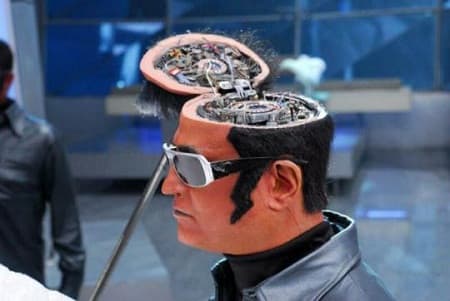
Researchers have demonstrated using mathematical models that the computers cannot have the ability to process the complex information at once. The consciousness, which is based on ability to process a lot of information along with the right context & experiences, thus cannot be achieved in machines. Professor Phil Maguire of the National University of Ireland explains this using XOR logic gate. The gate relies on predicting the output based on the combination of two inputs. He says that in order to get output, you have to input two bits and then one bit is obtained as output. If the brain worked in similar fashion, then it'd be continuously hemorrhaging information.
We're curious to know from our readers whether they agree or not. Do you think humans will finally be able to make the machines have emotions?
Source: <a href="https://www.dailymail.co.uk/sciencetech/article-2628150/Robots-NEVER-feelings-Mathematics-reveals-droids-experience-emotions-like-us.html" target="_blank" rel="noopener noreferrer">Robots will NEVER have feelings, experts claim | Daily Mail Online</a>
Giulio Tononi, researcher at the University of Wisconsin-Madison says that the machines will have to possess the ability to integrate information to achieve consciousness. Since machines are not able to contextualise information, just like human brain does, they will never be able to have emotions. For example, if you are looking at a green rectangle; the brain doesn't break it down as a 'colorless shape' + 'shapeless green area'. Instead, our brain processes it as one entity; because we know the bigger picture.
Researchers have demonstrated using mathematical models that the computers cannot have the ability to process the complex information at once. The consciousness, which is based on ability to process a lot of information along with the right context & experiences, thus cannot be achieved in machines. Professor Phil Maguire of the National University of Ireland explains this using XOR logic gate. The gate relies on predicting the output based on the combination of two inputs. He says that in order to get output, you have to input two bits and then one bit is obtained as output. If the brain worked in similar fashion, then it'd be continuously hemorrhaging information.
We're curious to know from our readers whether they agree or not. Do you think humans will finally be able to make the machines have emotions?
Source: <a href="https://www.dailymail.co.uk/sciencetech/article-2628150/Robots-NEVER-feelings-Mathematics-reveals-droids-experience-emotions-like-us.html" target="_blank" rel="noopener noreferrer">Robots will NEVER have feelings, experts claim | Daily Mail Online</a>