

NASA Transmits Video From ISS To Earth Using Lasers At 50Mbps

@satya-swaroop-YDeBJM
•
Oct 19, 2024
Oct 19, 2024
1.3K
NASA successfully tested its Optical Payload for Lasercomm Science (OPALS) technology by transmitting a video message from the International Space Station to Earth. This is the second time when NASA has replaced radio waves with lasers for faster communication. <a href="https://www.crazyengineers.com/threads/from-earth-to-moon-622-mbps-nasa.71348">From Earth To Moon @ 622 Mbps : NASA</a> they had implemented a similar method for high speed data transmission from moon to the earth. The data transmission process becomes tricky as the space station orbits Earth at 17,500 mph, and keeping a clear line of sight at this speed is difficult. To overcome this problem NASA programmed the OPALS to lock on to a laser beacon that was being transmitted by the Optical Communications Telescope Laboratory ground station at the Table Mountain Observatory in Wrightwood, California. It then began to modulate the beam from its 2.5-watt, 1,550-nanometer laser to transmit the video.
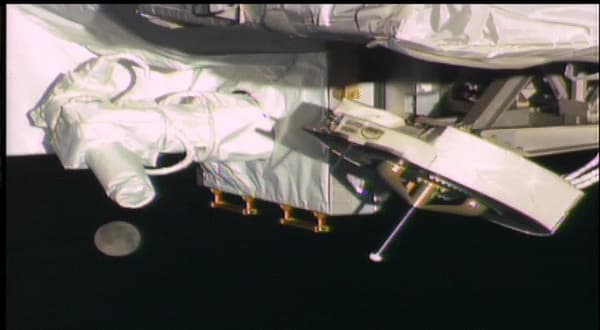
The transmission lasted for 148 seconds and the maximum data rate recorded was 50 megabytes per second. The OPALS system took 3.5 seconds to transmit each copy of the video which would have taken 10 minutes if they had used the conventional method of radio waves. The instrument had been sent to the ISS on April 20 via SpaceX’s Dragon cargo spacecraft and is scheduled to function for 90 days. OPALS system is a crucial experiment for NASA as it hopes to use similar optical communications aboard deep space exploration missions in the future.
By now you must be intrigued about the video that was transmitted via the system. Don’t worry we have got you covered, just click on the video below and if you are interested we have the official #-Link-Snipped-# too.
The transmission lasted for 148 seconds and the maximum data rate recorded was 50 megabytes per second. The OPALS system took 3.5 seconds to transmit each copy of the video which would have taken 10 minutes if they had used the conventional method of radio waves. The instrument had been sent to the ISS on April 20 via SpaceX’s Dragon cargo spacecraft and is scheduled to function for 90 days. OPALS system is a crucial experiment for NASA as it hopes to use similar optical communications aboard deep space exploration missions in the future.
By now you must be intrigued about the video that was transmitted via the system. Don’t worry we have got you covered, just click on the video below and if you are interested we have the official #-Link-Snipped-# too.