

KAIST Researchers Develop 3D Photolithographic Technology

@sharvari-panchbhai-JOvYc6
•
Oct 27, 2024
Oct 27, 2024
1.6K
Photolithography, also known as optical lithography or UV lithography, is an optical process that is used for transferring micropatterns on to a substrate. This is done by revealing particular areas of a light-sensitive material called photoresist layer to ultraviolet (UV) light. Optical lithography is widely used by industries that require microstructures and in the semiconductor manufacturing industry. The standard photolithography depends on photomasks for protecting certain areas of the substrate from the UV light. A micropattern is fabricated when the regions protected by the photomasks stays intact with base layer whereas the areas exposed to the UV light are washed away. However, this technology was able to create only 2D disc-shaped designs as the boundaries between the two areas (exposed and roofed regions under photomasks) are parallel in arrangement to the direction of light.
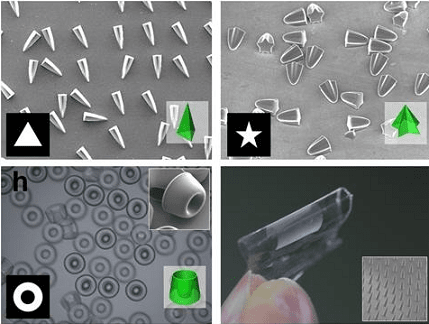
A research team from KAIST University has developed a photolithographic technology for controlling the functional shapes of micropatterns by making use of oxygen diffusion. The team, headed by Professor Shin-Hyun Kim, found that the UV exposed regions reduced the concentration of oxygen. This caused oxygen diffusion. The researchers also found that by manipulating speed and direction of the diffusion, they can manage to control the growth, shape and size of the polymers. Basically based on these observations, they developed new technology for producing complex 3D micropatterns of various shapes and sizes.
Radicals are responsible for initializing a chemical reaction. They are created by photoresist under UV light. However, the radicals are eradicated in the presence of oxygen. And, this averts the chemical reaction. In order to begin the reaction, the photoresist must be exposed to UV light for quite a long time until the oxygen is totally removed. Instead of removing the oxygen completely, the team made its use for controlling the shape and size of the polymer. It introduced an external oxygen source for handling strength and direction of the diffusion.
According to Professor Kim, this technology will boost the manufacturing process of 3D polymers. The research was published online in the journal Nature Communications.
Source: #-Link-Snipped-#
A research team from KAIST University has developed a photolithographic technology for controlling the functional shapes of micropatterns by making use of oxygen diffusion. The team, headed by Professor Shin-Hyun Kim, found that the UV exposed regions reduced the concentration of oxygen. This caused oxygen diffusion. The researchers also found that by manipulating speed and direction of the diffusion, they can manage to control the growth, shape and size of the polymers. Basically based on these observations, they developed new technology for producing complex 3D micropatterns of various shapes and sizes.
Radicals are responsible for initializing a chemical reaction. They are created by photoresist under UV light. However, the radicals are eradicated in the presence of oxygen. And, this averts the chemical reaction. In order to begin the reaction, the photoresist must be exposed to UV light for quite a long time until the oxygen is totally removed. Instead of removing the oxygen completely, the team made its use for controlling the shape and size of the polymer. It introduced an external oxygen source for handling strength and direction of the diffusion.
According to Professor Kim, this technology will boost the manufacturing process of 3D polymers. The research was published online in the journal Nature Communications.
Source: #-Link-Snipped-#