
Hybrid-Electric Plane Tested Successfully At Cambridge University

@chaitanya-kukde-yk3G31
•
Oct 24, 2024
Oct 24, 2024
1.4K
After the not too old news of a <a href="https://www.crazyengineers.com/threads/electric-cars-cover-200-miles-with-new-batteries-developed-by-startup-company-seeo.77877">Electric Cars Cover 200+ Miles With New Batteries Developed By Startup Company SEEO</a>, the aviation industry seems to be the next to go green. A prototype hybrid-electric propulsion engine has been tested at the Cambridge University in UK. The research was funded by aircraft manufacturer Boeing. The engine is also able to charge batteries in mid-air, the first of its kind. The experimental flights showed that the engine used upto 30 percent less fuel, a promising development for lower carbon footprint airplanes in not too distant future.
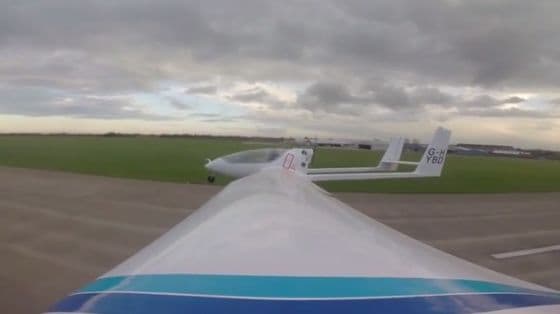
The Cambridge demo aircraft, a single-seater commercially available aircraft was equipped with a parallel combination of a 4-stroke piston 7kW Honda engine and a custom-built 10 kW electric motor/generator mechanism. For the take-off and landing, when more power is required, the engine and the motor work together. When the plane reaches the cruising height, the electric motor alone is switched to generator mode to charge the batteries or into the motor assist mode to minimize the engine fuel consumption.
The 16 Lithium-polymer cells are fitted in special compartments inside the wings. The engine is tweaked to provide enough power for the cruise speed while minimizing the fuel use at the same time. Although this is an exciting development, more research needs to be done to further optimize the engine and the battery cells if the technology is to be made commercial.
The Intergovernmental Panel on Climate Change (IPCC) estimates aviation is responsible for around 2% of global man-made carbon dioxide emissions. The Cambridge demonstrator plane which carried out the hybrid-engine tests at the Sywell Aerodrome near Northampton. These tests consisted of a series of ‘hops’ along the runway, followed by longer evaluation flights at a height of over 1,500 feet.
The engine was developed and tested by a team of engineers headed by Dr. Paul Robertson, of Cambridge's Dept. of Engineering. The team is further conducting test flights to optimise the system for best performance and fuel economy.
Source: <a href="https://www.cam.ac.uk/research/news/watts-up-aeroplanes-go-hybrid-electric" target="_blank" rel="nofollow noopener noreferrer">Watts up - aeroplanes go hybrid-electric | University of Cambridge</a>
The Cambridge demo aircraft, a single-seater commercially available aircraft was equipped with a parallel combination of a 4-stroke piston 7kW Honda engine and a custom-built 10 kW electric motor/generator mechanism. For the take-off and landing, when more power is required, the engine and the motor work together. When the plane reaches the cruising height, the electric motor alone is switched to generator mode to charge the batteries or into the motor assist mode to minimize the engine fuel consumption.
The 16 Lithium-polymer cells are fitted in special compartments inside the wings. The engine is tweaked to provide enough power for the cruise speed while minimizing the fuel use at the same time. Although this is an exciting development, more research needs to be done to further optimize the engine and the battery cells if the technology is to be made commercial.
The Intergovernmental Panel on Climate Change (IPCC) estimates aviation is responsible for around 2% of global man-made carbon dioxide emissions. The Cambridge demonstrator plane which carried out the hybrid-engine tests at the Sywell Aerodrome near Northampton. These tests consisted of a series of ‘hops’ along the runway, followed by longer evaluation flights at a height of over 1,500 feet.
The engine was developed and tested by a team of engineers headed by Dr. Paul Robertson, of Cambridge's Dept. of Engineering. The team is further conducting test flights to optimise the system for best performance and fuel economy.
Source: <a href="https://www.cam.ac.uk/research/news/watts-up-aeroplanes-go-hybrid-electric" target="_blank" rel="nofollow noopener noreferrer">Watts up - aeroplanes go hybrid-electric | University of Cambridge</a>