

Graphene Aerogel Is The World's Lightest Material

@thebigk
•
Oct 14, 2024
Oct 14, 2024
1.6K
Graphene Aerogel is the new world's lightest material created by research team headed by Prof. Gao Chao at Department of Polymer Science and Engineering in China's Zhejiang University. The new material has density of 0.16 mg/cm3. The earlier record was held by aerographite with density of 0.16 mg/cm3. The team used their extensive experience in developing one-dimensional graphene fibers and two dimensional films. Gao and his team added a third dimension to create a popous material from graphene. For the sake of comparison, the new graphene aerogel has density lower than helium, about 2x that of hydrogen.
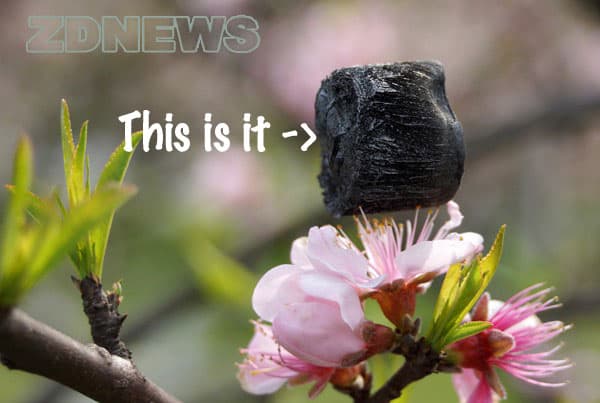
The team even used a new type of method called 'freeze-drying' to create graphene sponge which can adjust to any shape. The material is not only the lightest, but very elastic and can absorb 900x its own weight in oil. The team proposes that the material can be used to mop up oil spills in the sea.
Check out more information on following links -
Source: #-Link-Snipped-# | Via: #-Link-Snipped-#
The team even used a new type of method called 'freeze-drying' to create graphene sponge which can adjust to any shape. The material is not only the lightest, but very elastic and can absorb 900x its own weight in oil. The team proposes that the material can be used to mop up oil spills in the sea.
Check out more information on following links -
Source: #-Link-Snipped-# | Via: #-Link-Snipped-#