
Darfon Maglev Keyboard - Because Our Computers Gotta Be Thinner

The Maglev technology is almost synonymous with the bullet trains in Japan; but the it's now making its way to the keyboards! Darfon has prototyped a new keyboard that replaces the regular rubber cushions with magnetic forces to form a cushion that restores the keys in place after the pressure is released. Because of the absence of rubber, the overall thickness of the keyboard can be reduced to a greater extent.

Aloysius Low of C|Net got a chance to test out the demo laptop. Low observed that because the keys were so close to the body of the laptop that typing was harder than with regular keyboards. The overall resistance and the clickiness factor of the buttons, Low says, was just about right. Since the cushion is created by electro-magnets, the resistance of the keys can be controlled and personalised.
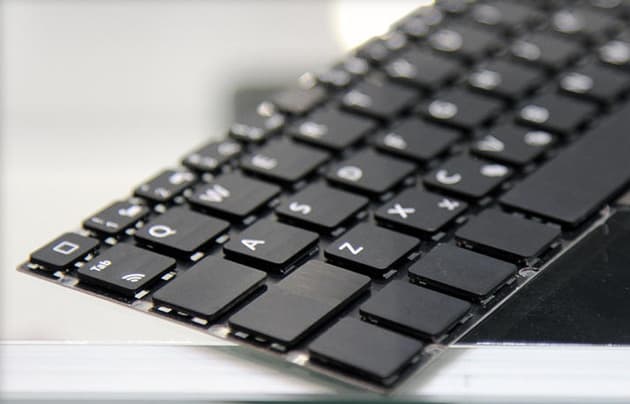
Darfon-Maglev-Keyboard
It's expected that these keyboards will make it to the production machines by the end of this year. We do not know if we really need thinner laptops than what we already have in the markets; but our fellow engineers seem to be obsessed by making things even thinner. It's just a matter of time that we'll have to teach ourselves to type on plain surfaces. Perhaps, time has come that the regular physical keyboards on laptops are totally replaced by virtual ones.

We look forward to receiving views and opinions of CEans. Tell us what do you think about maglev keyboards.

Source: #-Link-Snipped-#

Replies

Welcome, guest

Join CrazyEngineers to reply, ask questions, and participate in conversations.

CrazyEngineers powered by Jatra Community Platform

  • Abhishek Rawal

    @abhishek-fg9tRh Jun 6, 2014

    Amazing! Could be very helpful in creating mini-computers using RPi or Beagleboard or any such similar development boards.

    The rubbers are quite light weight but space consuming, Magnets could be heavy and space saving. Weight could be the key factor here.

  • Anoop Mathew

    @anoop-FRTf1L Jun 7, 2014

    Questions that come to my mind after reading this:-☕
    1. If this were to come in production, would it really make a great marginal difference in the way we deal with (use) laptops?
    2. Would this mean that the bridge between a laptop and a tablet gets reduced?
    3. The 'click-effect' is required to register that a word is 'typed' as we're accustomed to it already. What about introducing the same keyboard structure as was used in phones like Nokia 1100 and the like (with of course a little more width for the key) - wouldn't that suffice?
    4. Would keys with 'Feather-touch' and touch vibrations make a better impact than 'clicklet' keyboards??

  • Rajni Jain

    @rajni-E46Rlm Jun 8, 2014

    Is there any limit for the reduction of thickness?
    Is there a need for it?

    I am just wondering why everyone is all behind reducing the size and thickness of the devices. Per me, beyond a point the thickness and smaller size gives pain in using the device. There is always a danger of breaking it when used improperly.

    On the technical side of it, replacing the rubber cushion with magnets may reduce the size but what about maintenance? Usually, if a key goes bad, we can easily replace that, but what would be the scene in this newly technologically advanced keyboards? It won't be that easy and cheaper task, right?

  • Gurwinder Singh

    @gurwinder-6v01b4 Jun 8, 2014

    Rajni JainIs there any limit for the reduction of thickness?
    Is there a need for it?

    I am just wondering why everyone is all behind reducing the size and thickness of the devices. Per me, beyond a point the thickness and smaller size gives pain in using the device. There is always a danger of breaking it when used improperly.

    On the technical side of it, replacing the rubber cushion with magnets may reduce the size but what about maintenance? Usually, if a key goes bad, we can easily replace that, but what would be the scene in this newly technologically advanced keyboards? It won't be that easy and cheaper task, right?

    Reducing the size and thickness of the devices can help to save energy and more battery backup

  • Rajni Jain

    @rajni-E46Rlm Jun 8, 2014

    Gurwinder SinghReducing the size and thickness of the devices can help to save energy and more battery backup

    save energy and more battery backup; really? Can you explain how?

    In darfon maglev keyboard they reduced the size by removing mechanically operated rubber pads with magnetized cushion which will definitely take battery juice/

  • Gurwinder Singh

    @gurwinder-6v01b4 Jun 8, 2014

    Rajni Jainsave energy and more battery backup; really? Can you explain how?

    In darfon maglev keyboard they reduced the size by removing mechanically operated rubber pads with magnetized cushion which will definitely take battery juice/

    sorry, i do not talking about particular this keyboard only. i am just talking about the all electronic gadgets.(if we compare to old TV to today's LCD/LED, old PC to today's Laptop){when i had big PC with big UPS battery then i had small battery bakeup 15mins now i have small laptop with small battery and have big battery bakeup 3hrs}

  • ahmed sarfraz

    @ahmed-Dx1LlC Jun 9, 2014

    I wonder when we get the a real paper circuit which vibrates so as to diminish the need of click (as an acknowledgment that the word is typed).