

Palm-top device logs real-time data about medication levels in bloodstream

It's very important for the doctors to figure out how many chemicals are flowing in your bloodstream before administering or prescribing new drugs. Until now, there wasn't any clear method available to determine that. Doctors used age and overall weight of the patient as guiding factors. However, a new device developed by the researchers at the University of California allows for real time data logging of the overall medication already flowing in patient's blood.
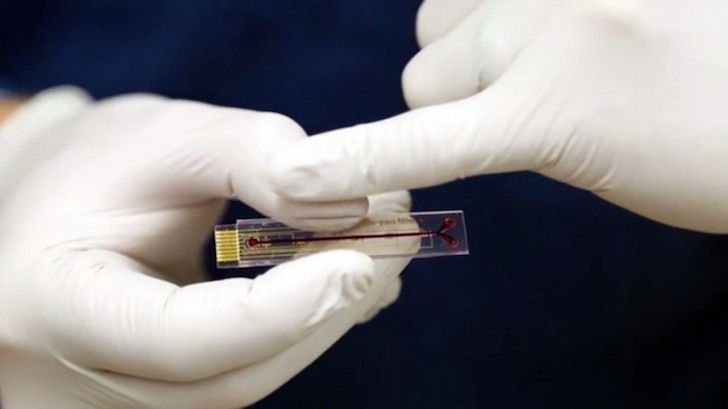
The team comprising of Tom Soh, Kevin Plaxo and Scott Ferguson developed this device called "MEDIC" which stands for Microfluidic Electrochemical Detector for In vivo Concentrations. MEDIC incorporates a narrow canal like structure with gold electrodes running across the length. These electrodes are connected to the DNA strands called Aptamers - capable of recognising specific drug molecules. Tests conducted on rats in controlled laboratories have been very accurate.
The future of the device could be in in-stream drug dispenser. It can be controlled to release the required drug whenever required by the body. We'd love to hear views from our genetic, biotech and biomedical engineers!
Source: #-Link-Snipped-# | <a href="https://www.news.ucsb.edu/2014/013903/live-feed-our-bodies" target="_blank" rel="noopener noreferrer">Live Feed into Our Bodies | The UCSB Current</a>
