

Binghamton University Research Makes Way For Flexible Electronics And Solar Cells

Research team at <a href="https://www.binghamton.edu/" target="_blank" rel="noopener noreferrer">Binghamton University</a> (NY State) have succeeded in tweaking the electrical properties of Graphene Oxide. Prof. Jeffrey Mativetsky, assistant professor of Physics along with PhD student Austin Faucett conducted a detailed study to gain unprecedented spatial control over the electrical properties of the material that could now revolutionize manufacturing of flexible electronics, solar cells and even the biomedical sensors. It's no brainer that the applications of these would be very wide spread across various industries.
The details of the study were first published in international journal 'Carbon'. The process developed by the researcher duo is very eco-friendly, that avoids use of harmful chemicals, high temperatures or even the atmospheres that require presence of inert gases.
Researchers are confident that their way of manufacturing with Graphene Oxide will first be useful in study and development of lab scale devices but can be expanded to create low cost electronics.
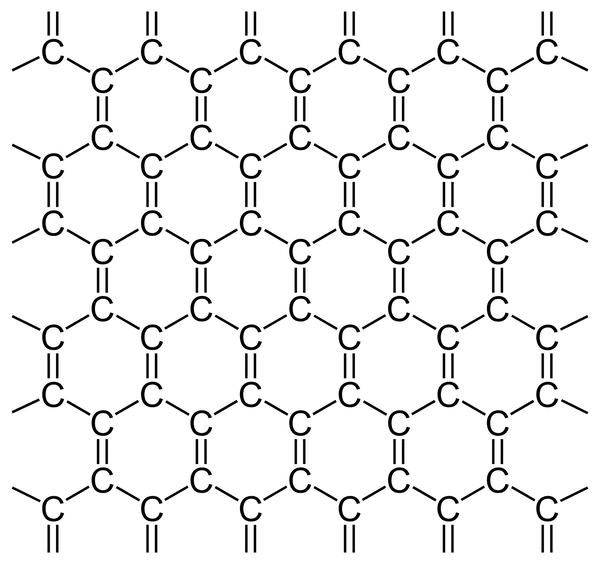
Mativetsky and Faucett were able to trigger a local chemical reaction that could pattern the desired features onto graphene oxide sheets. Mativetsky informed that their approach allows for drawing nanoscale level electrically conductive features on very thin, otherwise insulating sheets of the material with the spatial control that wasn't possible before.
The study also provides new insights into the spatial resolution limits and ways to create conductive patterns on graphene oxide. Check out further details of the study on the source link below.
Graphene is an interesting material that's keeping researchers around the world excited sinces its discovery in 2003. It not only is about 207 times as strong as steel by weight, is nearly transparent and is a good conductor of heat and electricity. The material was theorized by scientists for several decades before Andre Geim and Konstantin Novoselov isolated it in lab. The duo were awarded Nobel Prize for their discovery in 2010.
Source: #-Link-Snipped-#
